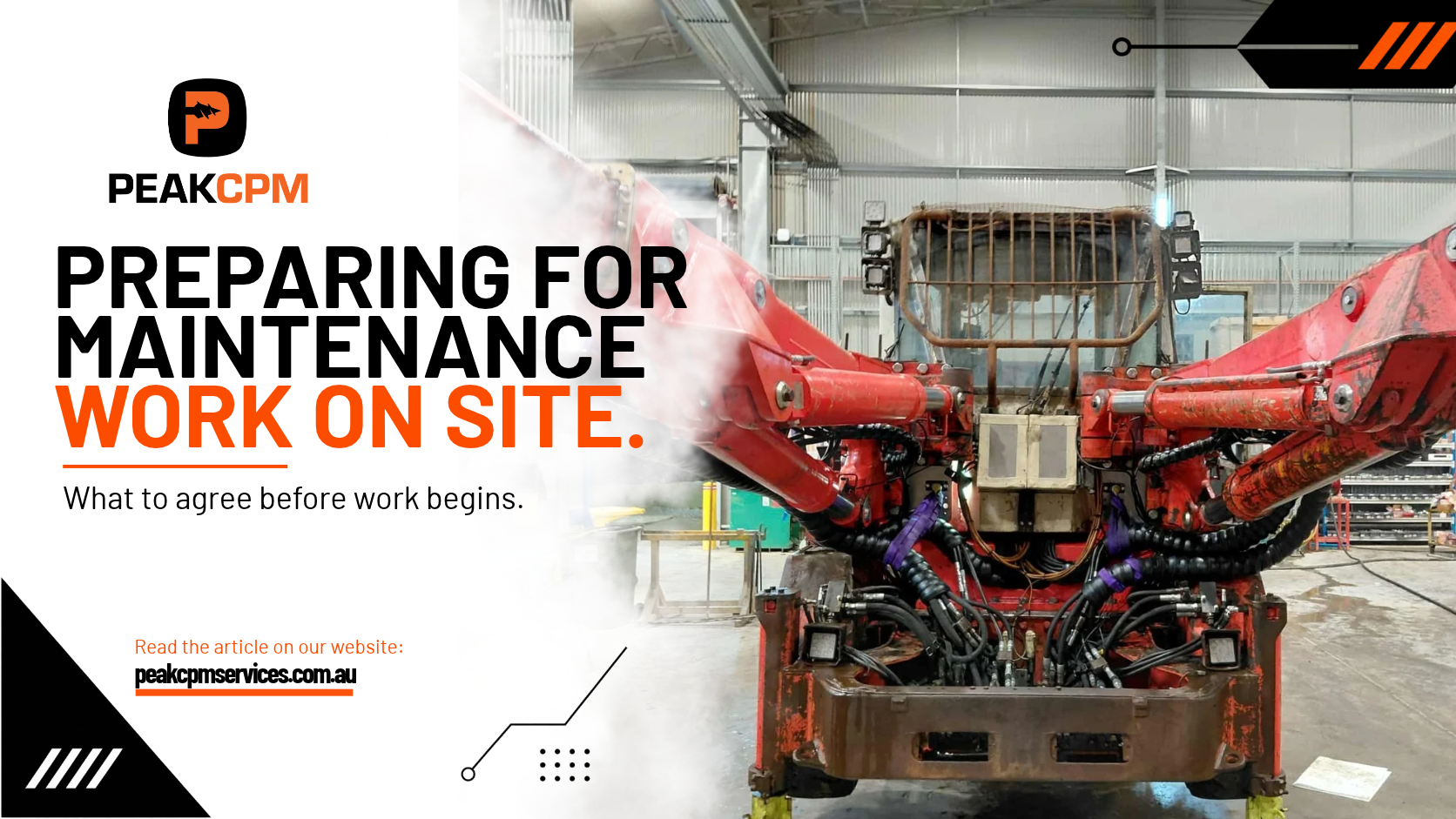
Preparing for maintenance work on site
A maintenance requirement might involve an equipment issue, a planned rebuild or extra support for an existing team. Understanding the job and how it fits the operation helps shape the people, preparation and timing required.
At PeakCPM Services, maintenance is about understanding why equipment fails, improving reliability and reducing the downtime that affects production. Our drifter support, equipment and component rebuilds, drilling consumables, operator and fitter training, and specialist maintenance support all contribute to that.
The starting point is a practical conversation about the equipment, the work needed and the site’s priorities. From there, the site and maintenance teams can clarify what is known, what needs assessment and what must be in place before work begins.
Understand the equipment and the work
Identify the equipment involved and describe the issue or work required. This could be ongoing maintenance, an equipment or component rebuild, drifter support or another site need. Explain what you want to address and any operating constraints that affect the job.
Share the available equipment and service history, along with the proposed location and timing. If the same fault keeps returning, include previous repairs, component hours and what operators or fitters have noticed. Recurring leaks, unusual wear or a drop in drilling performance provide useful starting points for further assessment.
Understanding component condition and the history behind the issue helps develop a scope that addresses the cause of the problem.
Confirm who is coordinating the work
Make the site contacts and responsibilities clear. The maintenance team needs to know who can answer questions about the equipment, who is coordinating the job and who can approve changes to the scope.
When additional support is joining an existing operation, discuss how the crew will work with site supervisors and maintenance personnel. Confirm the skills required and how responsibilities will be shared between the teams.
Check what needs to be ready
Discuss equipment access, parts, tooling, job information and the available maintenance window. Confirm correct part numbers, availability and delivery lead times early. Time spent waiting for parts or tooling can extend a stoppage well beyond the repair itself.
Agree which resources and arrangements the site will provide and which the support team needs to organise.
Confirm these arrangements alongside site procedures and task-specific assessments. Raise gaps in access, resources or information early so they can be addressed before the job starts
Keep the scope and communication up to date
Further inspection or strip-down may reveal wear or damage that changes the work required. Agree how findings will be raised, who needs to review them and how any proposed change to the scope will be approved.
Keep the site and maintenance teams informed as the job develops. Where a change affects parts, people or timing, discuss the implications and agree the next step so everyone is working from the same information.
Where findings point to consumable selection, operating practices or maintenance routines contributing to the issue, discuss whether changes or targeted operator and fitter training should form part of the follow-up.
Plan the work with PeakCPM
PeakCPM brings equipment maintenance, drifter support, rebuilds, drilling consumables and training together to help sites improve reliability and drilling performance. Equipment hire solutions can also be discussed where required.
Have an upcoming maintenance or rebuild requirement, or a recurring equipment issue? Get in touch with your equipment details, service history, location and proposed timing.
The PeakCPM team can discuss what needs assessment and work with you towards an agreed scope that supports the equipment and the operation